PCOS Treatment in Ahmedabad
PCOS and PCOD care at our Naroda hospital: a diagnosis made the way the 2023 international guideline sets out, the scan done at the same visit, and a plan built around what matters to you now — your periods, your skin, your weight or a pregnancy.
Polycystic ovary syndrome is one of the commonest reasons a woman in her teens, twenties or thirties sees a gynaecologist. Pooled Indian studies put it at about 1 in 9 women using the standard Rotterdam criteria (11.3% overall, across 11 studies — a national figure, not this hospital’s).1 Many people call it PCOD; doctors usually write PCOS. In everyday use they mean the same condition, and it is treated the same way.
There is no single “PCOS treatment”. PCOS is managed, not cured, and the right plan depends on which of its effects is troubling you. A college student with periods every three months needs something very different from a woman who has been trying to conceive for a year. This page explains how the diagnosis is made, how the treatment is chosen, and what is done here at Cosmic.
How PCOS is diagnosed
The diagnosis rests on three features. You need any two of them, once other causes of the same picture have been ruled out — most often a thyroid problem or a raised prolactin level, which is why those blood tests are part of the first work-up.2
Two details in that guideline change how PCOS is diagnosed in practice. First, an ovary is only called polycystic at 20 or more follicles, or a volume of 10 ml or more — a stricter threshold than the “12 follicles” many older reports still use, which over-labels normal ovaries.2 Second, in a girl within eight years of her first period, irregular cycles and acne are common and often settle on their own, so the scan and the AMH blood test are not used to make the diagnosis at that age.2 A teenager can be watched and treated for her symptoms without being given a lifelong label too early.
Acne or hair thinning on its own is a weak sign of PCOS; excess hair growth is a stronger one.2 And polycystic-looking ovaries on a scan, with regular periods and no hormone signs, are not PCOS.
What you want now decides the treatment
The plan starts with one question: what is PCOS doing to you that you want changed? Most women have more than one answer, and the treatments can be combined.
Regular periods, and protecting the womb lining
When periods come only a few times a year, the lining of the womb keeps building up without being shed. Over years that raises the risk of endometrial hyperplasia and, later, endometrial cancer — the guideline calls the risk “markedly higher” in women with PCOS.2 So regular periods are not only about convenience. The combined pill is the usual first choice where it suits you;2 where it does not, a short course of hormone tablets every few months can bring on a bleed instead.
Excess hair and acne
The same pill lowers the effect of male hormones on the skin and hair follicles, and the guideline recommends it for hirsutism.2 It works slowly — give it about six months before judging it — and it works best alongside hair removal and skin care rather than instead of them.
Weight, blood sugar and the long term
PCOS is as much a metabolic condition as a gynaecological one. The guideline asks for blood sugar to be checked at diagnosis in every woman with PCOS, whatever her weight, and again every one to three years, with the 75 g glucose tolerance test as the most accurate test.2 Where the BMI is 25 or more, metformin is considered alongside diet and activity.2 Even a modest, sustained loss of weight often makes periods more regular on its own — the aim is a change you can keep up, not a crash diet before a scan.
The guideline also asks for women with PCOS to be screened for low mood and anxiety, which are more common with the condition and often go unasked about.2 If it is on your mind, say so at the visit.
Trying for a baby
PCOS makes conception harder because ovulation is irregular, not because the eggs are poor, and ovulation can usually be restored with treatment. The first step is a tablet to bring on ovulation: letrozole is the guideline’s first choice, ahead of clomiphene.2,3 Each treatment cycle is watched on follicle-tracking scans, so the dose and the timing are set by what the ovary is actually doing. If tablets do not work, the next options are low-dose injections or laparoscopic ovarian surgery, and then IUI or IVF.2 A PCOS ovary tends to respond strongly to stimulation, so every step is dosed to keep the risk of over-response and twins low. Our article on PCOS and fertility covers this in more detail.
PCOS also matters once you are pregnant: the risk of gestational diabetes is higher,2 so the sugar test in pregnancy is not one to skip.
PCOS care at Cosmic, Naroda
| What you need | What is done here |
|---|---|
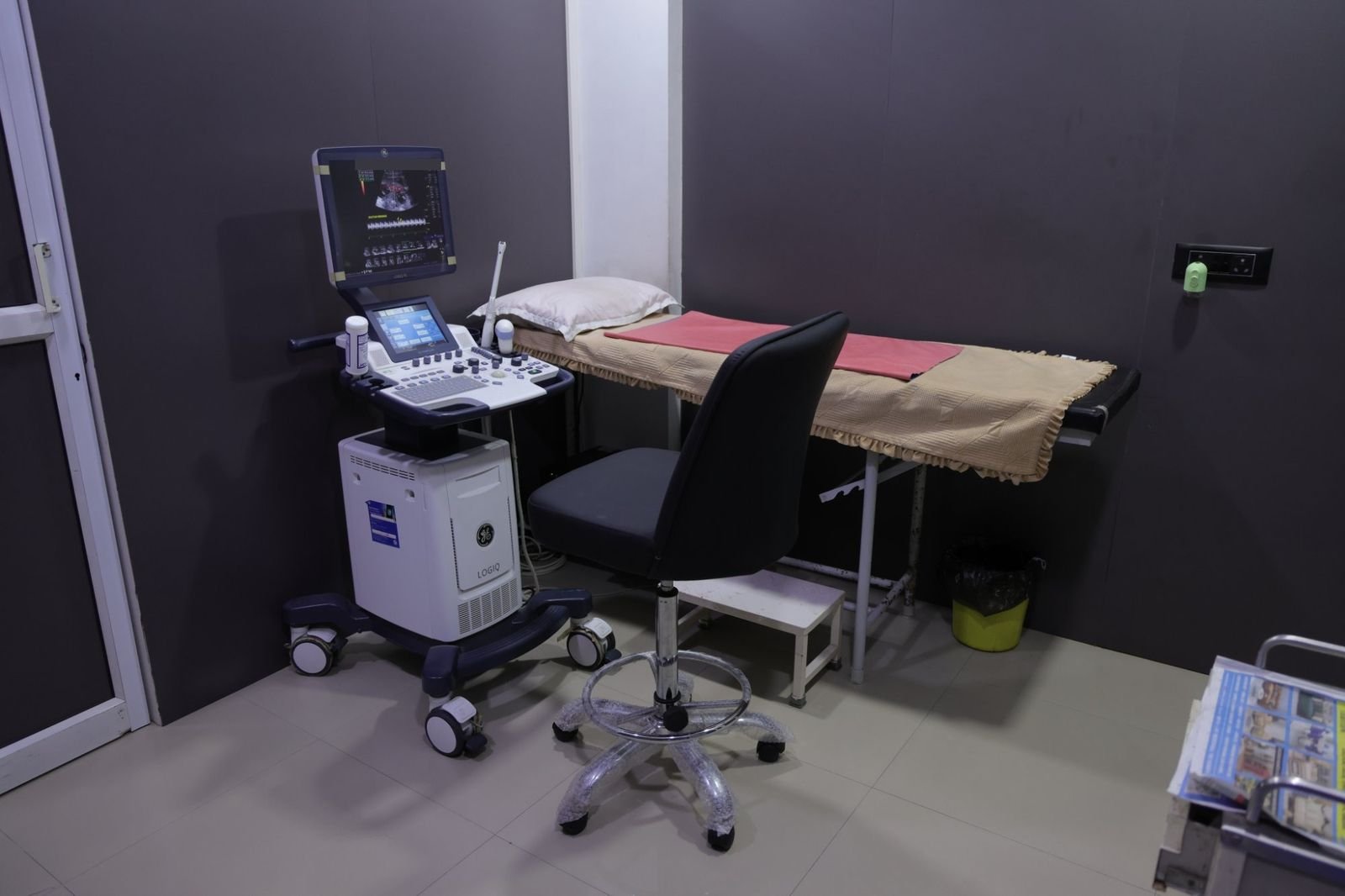
| Diagnosis | Consultation, history and examination, with the pelvic ultrasound done in the same visit by the consultant, and the blood samples for hormones, thyroid, prolactin and sugar taken here at the same visit |
| Periods, skin and weight | A treatment plan built around your goals, with follow-up to review how it is working |
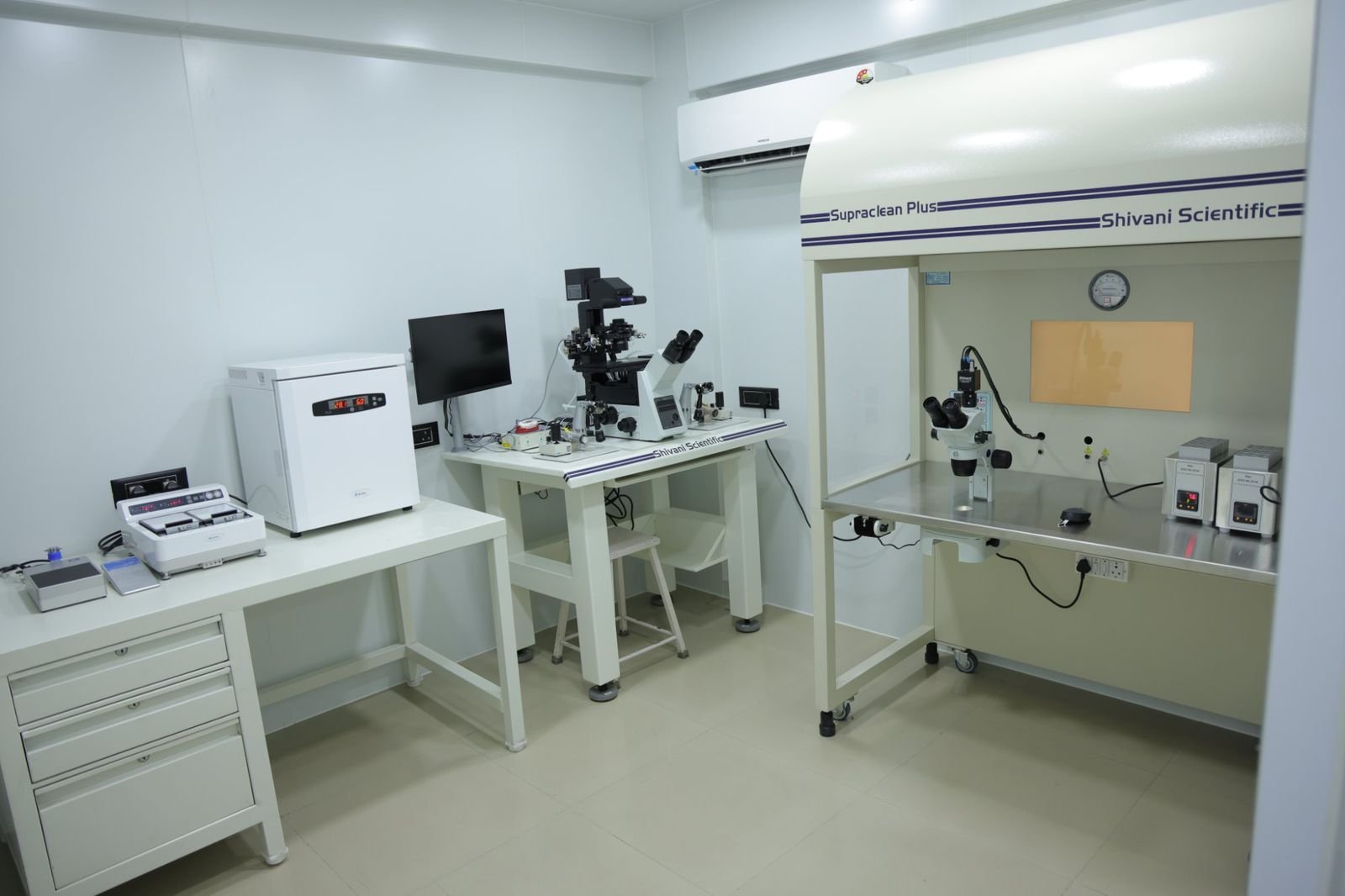
| Trying to conceive | Ovulation induction with follicle-tracking scans, IUI, and IVF in our own registered laboratory — IVF from Rs 1,20,000 |
| Ovulation that does not respond to tablets | Laparoscopic ovarian drilling, done here by Dr. Rahul Khatri, as the guideline’s second-line option alongside injections |
| Ovarian cysts or other findings on the scan | Keyhole surgery in-house where it is needed — see laparoscopic surgery |
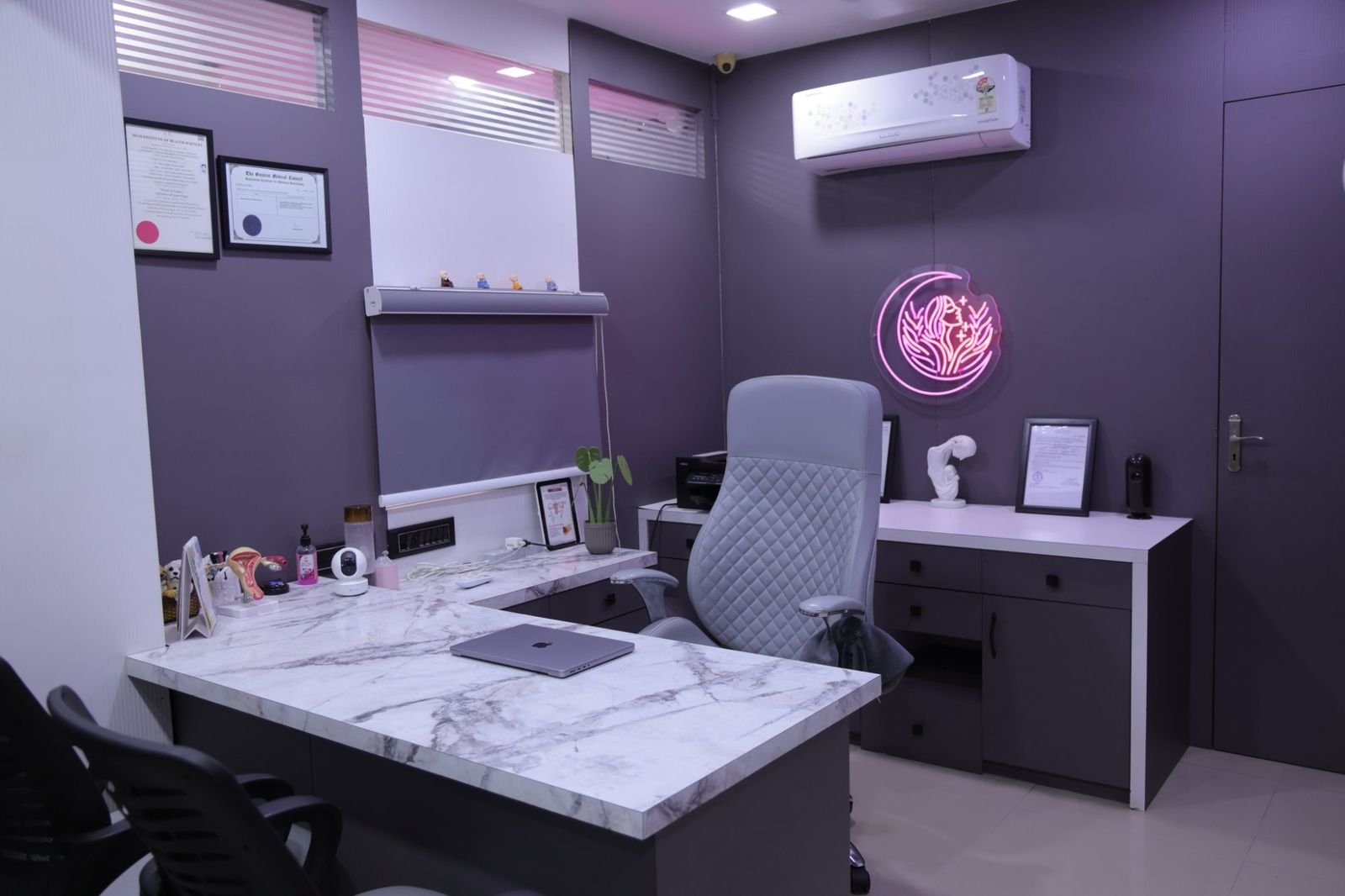
PCOS and fertility care here is led by Dr. Bhargavi Khatri, Consulting Obgyn, Infertility & IVF Specialist, who also performs the IVF procedures. Keyhole surgery is done by Dr. Rahul Khatri, Consulting Obgyn, Laparoscopic & Robotic Surgeon. The ultrasound scans are performed by the consultants themselves, and a female attendant is present with every patient throughout.
| Consultation | Fee |
|---|---|
| New consultation, general gynaecology (periods, skin, weight) | Rs 500 |
| New consultation, infertility | Rs 1,000 |
| Follow-up consultation | Rs 300 |
Scan and test charges are told to you before anything is done. OPD runs Monday to Saturday, 10 am to 8 pm. Dr. Bhargavi Khatri’s sessions are 1 pm to 4.30 pm and 6 pm to 8 pm; Dr. Rahul Khatri’s are 10 am to 1 pm and 5 pm to 8 pm.
Coming from Naroda and nearby
The hospital is on the 3rd floor of The Capital Corporate, near Naroda Muktidham. Women come to us for PCOS care from across north-east Ahmedabad, including Nava Naroda, Nikol, Bapunagar and Kubernagar, and from towns such as Dehgam. The first work-up — consultation, scan and blood samples — is done in one visit.
Questions women ask about PCOS
Can PCOS be cured?
No, but it can be controlled well. Symptoms often change with age and weight, and the treatment changes with them — the pill in your twenties, ovulation treatment when you want a baby, and sugar checks for life.
Do I have to lose weight before I can get pregnant?
Not before you can be helped. Where weight is raised, losing some of it improves ovulation and pregnancy health, and that advice is part of the plan. But ovulation treatment is not withheld until a target weight is reached.
My scan report says “polycystic ovaries”. Do I have PCOS?
Not on the scan alone. Polycystic-looking ovaries are common in women with normal periods and normal hormones. PCOS needs a second feature — irregular periods or excess male hormone — and the follicle count has to meet the 20-follicle threshold.
Is PCOD different from PCOS?
In everyday use, no. “PCOD” is the term many people in India use; “PCOS” is the name in the medical guidelines. The diagnosis and treatment are the same.
- Bharali MD, Rajendran R, Goswami J, Singal K, Rajendran V. Prevalence of polycystic ovarian syndrome in India: a systematic review and meta-analysis. Cureus. 2022;14(12):e32351.
- Teede HJ, Tay CT, Laven JJE, et al. Recommendations from the 2023 international evidence-based guideline for the assessment and management of polycystic ovary syndrome. Hum Reprod. 2023;38(9):1655–1679.
- Legro RS, Brzyski RG, Diamond MP, et al. Letrozole versus clomiphene for infertility in the polycystic ovary syndrome. N Engl J Med. 2014;371(2):119–129.