
Maternity Hospital in Naroda
Antenatal care, scans, delivery and caesarean section in one Naroda hospital — both consultants conduct deliveries, obstetric cover runs 24 hours, and the ultrasound is in the same building.
Choosing where to deliver is the one decision in a pregnancy that gets made early and then quietly shapes everything after it — how often you are seen, who scans you, who is in the room at two in the morning, and what happens if the plan changes on the day. This page sets out what maternity care at our Naroda hospital actually consists of, so that the decision can be made on facts rather than on a feeling about a building.
What a maternity hospital has to be able to do
Four things decide whether a maternity unit suits you, and all four are worth asking about anywhere you are considering, not only here.
| What to ask | At Cosmic, Naroda |
|---|---|
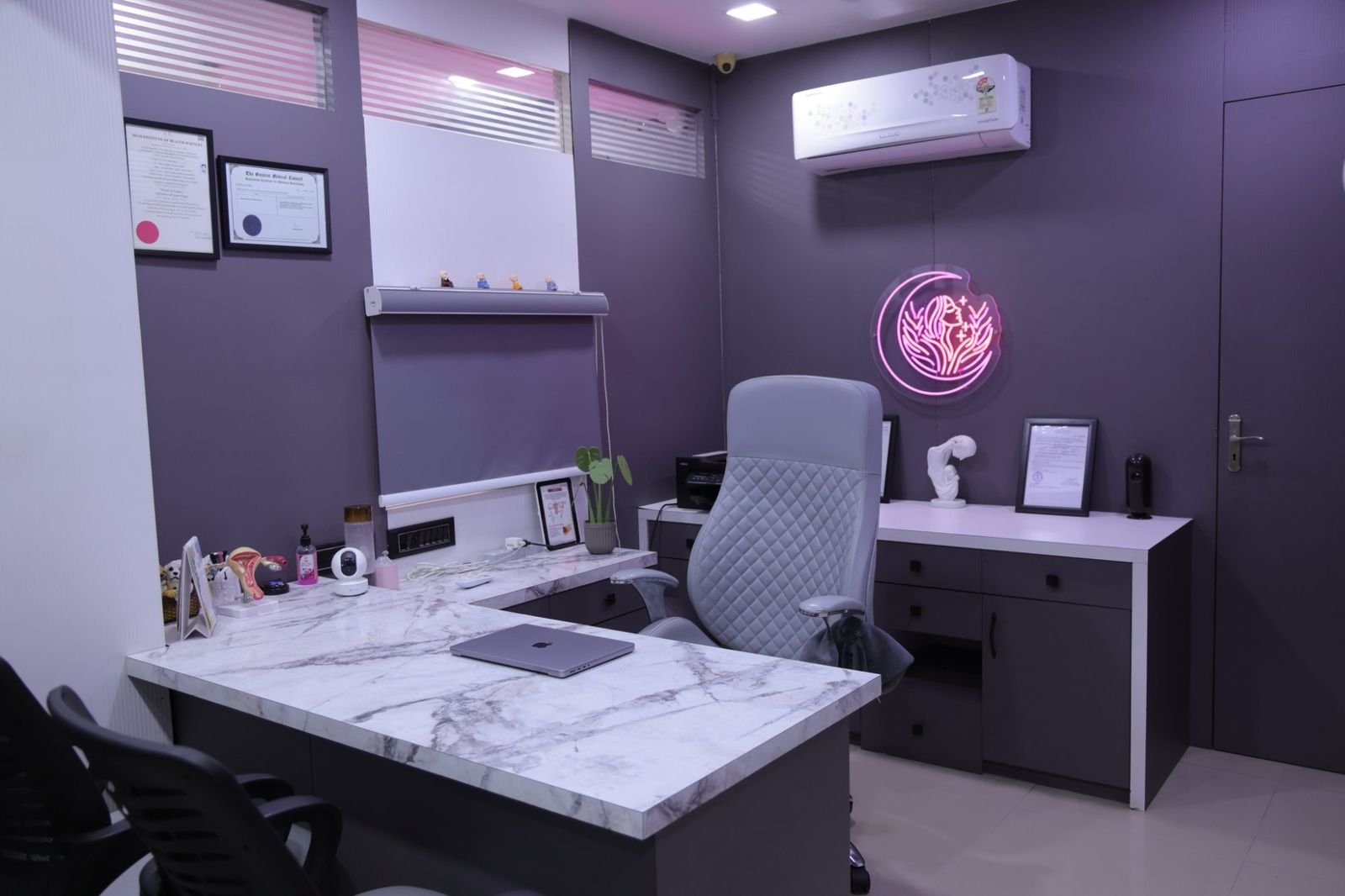
| Who actually conducts the delivery and the caesarean | Both consultants do. Dr. Bhargavi Khatri and Dr. Rahul Khatri each conduct normal deliveries and caesarean sections, and each manage high‑risk pregnancies. The consultant you book with is the consultant who looks after you through the pregnancy and the birth. |
| Is there obstetric cover at night and on Sunday | Emergency obstetric cover runs 24 hours, every day. The OPD runs Monday to Saturday, 10 am to 8 pm; there is no Sunday OPD. |
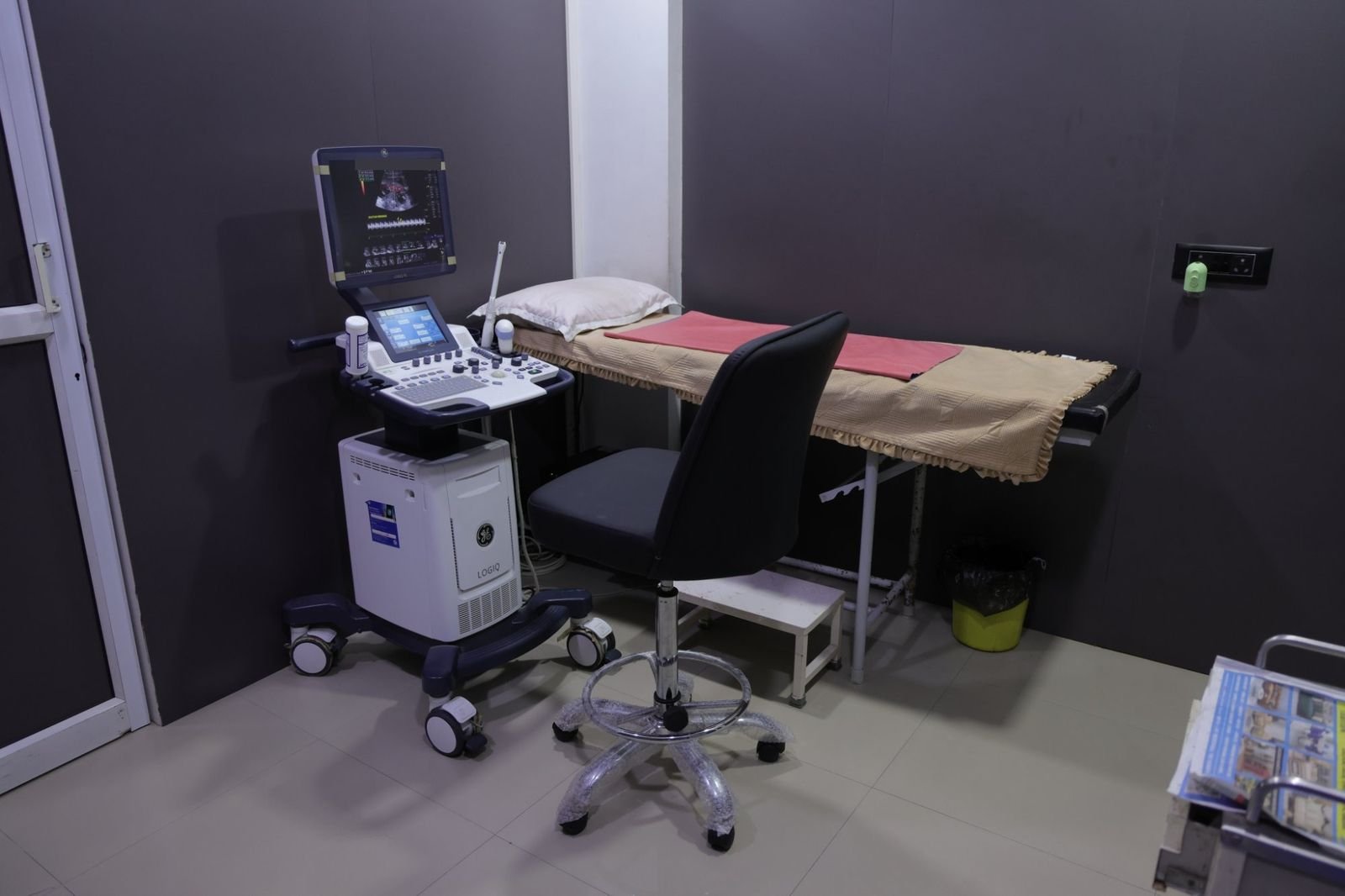
| Is ultrasound done in the same building | Yes — dating, NT, anomaly, growth and colour Doppler scans are all done in‑house, by your own consultant. |
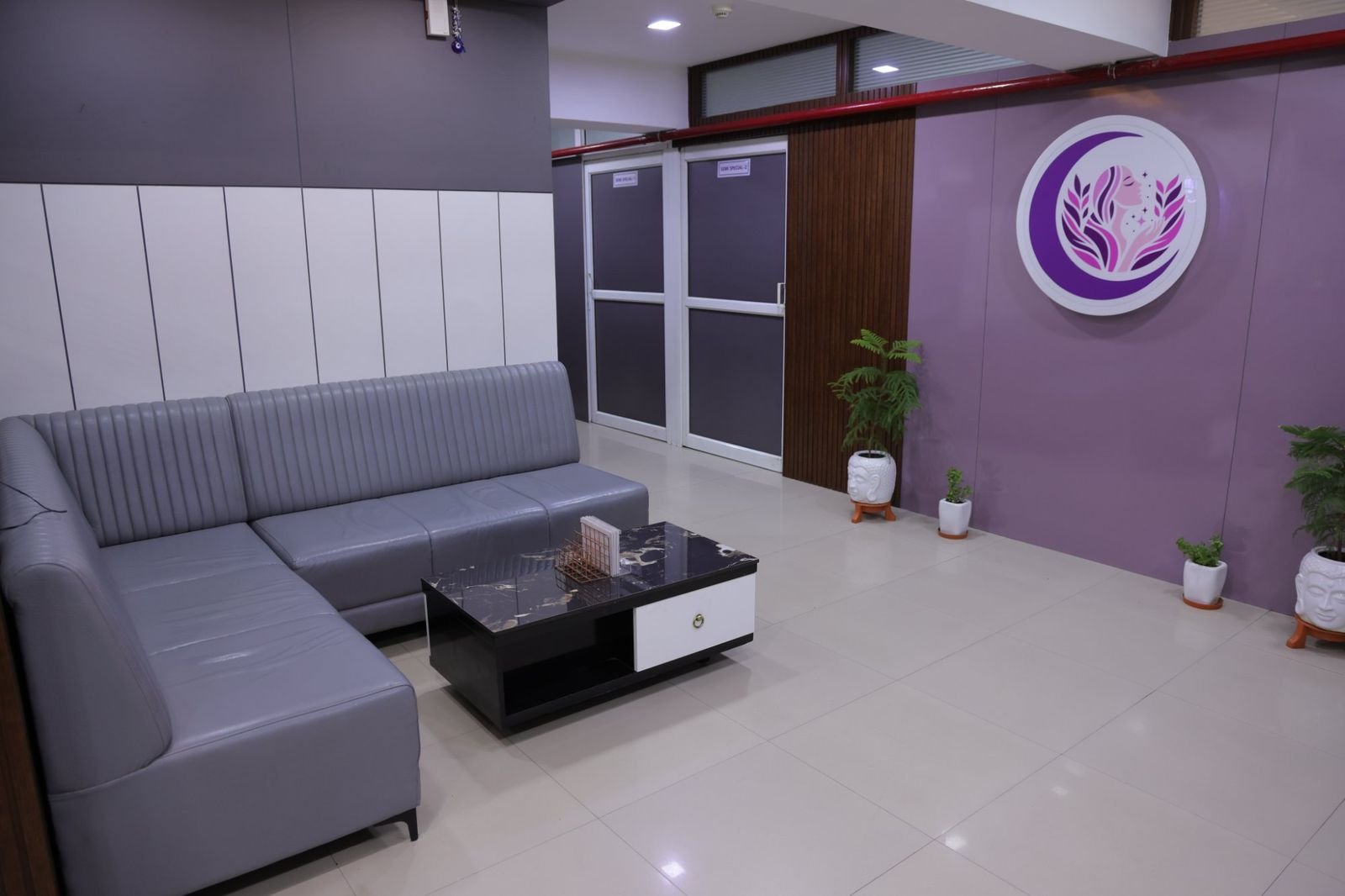
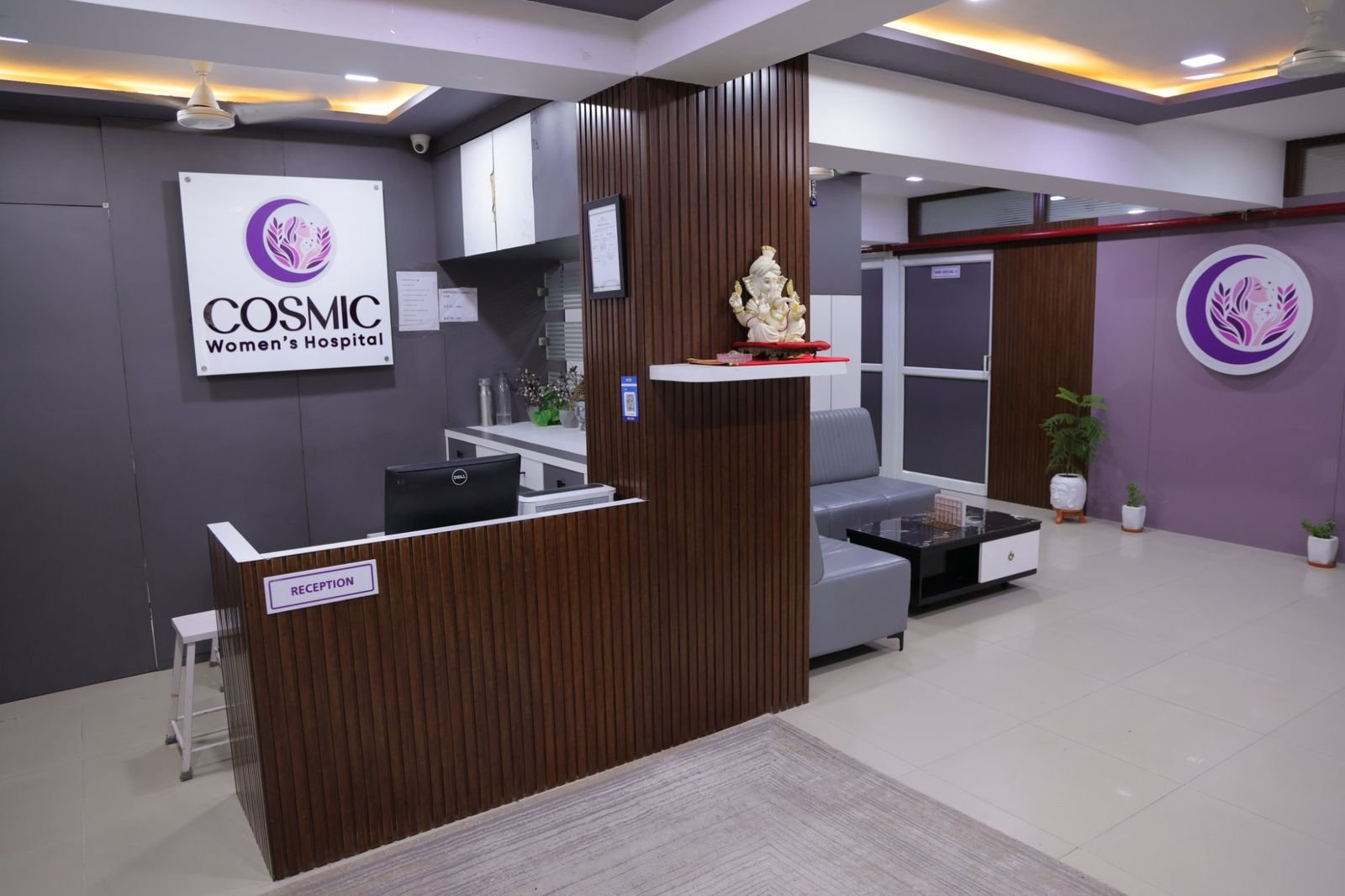
| Is there admission and a ward, or only a day facility | Admission, ward and operation theatre are all on the same floor as the OPD, at The Capital Corporate, near Naroda Muktidham. |
How often you will be seen
The World Health Organization’s 2016 antenatal model recommends a minimum of eight antenatal contacts — the first inside 12 weeks, then at 20, 26, 30, 34, 36, 38 and 40 weeks — on the evidence that eight contacts reduce perinatal deaths compared with the older four‑visit schedule. That is a floor for a public health system, not a target for an individual pregnancy. The schedule followed here is closer than that, and it tightens as you get nearer to term.
| Stage of pregnancy | How often you are seen here |
|---|---|
| First trimester | Every 3 weeks |
| Second trimester | Every 4 weeks |
| Seventh month | Every 3 weeks |
| Eighth month | Every 2 weeks |
| Ninth month to delivery | Every week |
A pregnancy that is being watched for a specific reason — raised blood pressure, a previous loss, diabetes, twins, a growth concern on a scan — is seen more often than this, and the reason is written down so you know what is being looked for. That work is described separately in our page on high‑risk pregnancy care.
The scans, and the law that governs them
Every routine obstetric scan is done in this building, by the consultant looking after you rather than by a separate centre you are sent to and then have to bring a report back from. In practice that means the dating scan, the 11–13+6 week NT scan, the 18–22 week anomaly scan, and third‑trimester growth scans with colour Doppler where the growth or the liquor needs watching.
PC&PNDT Act, 1994. Prenatal sex determination is not done here and is prohibited by law under the Pre‑conception and Pre‑natal Diagnostic Techniques Act, 1994. Please do not ask the doctor or the staff for it. Every scan performed is recorded under the Act.
Delivery: normal birth, caesarean, and birth after a caesarean
Most of the argument about delivery is really an argument about who decides and when. The position taken here is that the route of delivery is a decision made with you in the third trimester, revisited if the clinical picture changes, and not announced to you in labour for the first time. What is actually being weighed is set out in our article on what a consultation covers and in the pages below.
A trial of labour after a previous caesarean — VBAC — is offered here where the previous caesarean was a lower-segment one — a low-transverse scar, and no classical or upper-segment scar. It is not right for every woman even then, and it needs a unit that can move to an emergency caesarean quickly, which is what the 24‑hour cover exists for. The numbers that matter to the conversation come from ACOG’s Practice Bulletin No. 205: across published series, 60–80% of women who attempt a trial of labour after caesarean go on to deliver vaginally, and among women with one previous low‑transverse incision the uterine rupture rate is approximately 0.5–0.9%.
Who looks after you
Both consultants are obstetricians, and in obstetrics they do the same work: antenatal care, high‑risk pregnancy, normal deliveries and caesarean sections are all carried out by each of them. Outside obstetrics their sub‑specialties differ — Dr. Rahul Khatri takes the laparoscopic and hysteroscopic surgery, and Dr. Bhargavi Khatri leads the fertility and IVF programme. For you that means continuity: the consultant who books you is the one who scans you, sees you through the third trimester and is in theatre if a caesarean is needed. A woman who would rather be seen by a female doctor throughout can be booked into Dr. Bhargavi Khatri’s sessions — the practicalities are covered on our page for a female gynaecologist in Ahmedabad. A female attendant is present throughout every internal examination and scan.
| Consultant | OPD sessions, Monday to Saturday |
|---|---|
| Dr. Rahul Khatri — MBBS, MS & DNB Obgy, FMAS | 10:00 am – 1:00 pm and 5:00 pm – 8:00 pm |
| Dr. Bhargavi Khatri — MBBS, MS Obgy (Gold Medalist), FRM | 1:00 pm – 4:30 pm and 6:00 pm – 8:00 pm |
Anaemia is the thing worth fixing early
Of all the things an antenatal booking visit picks up in this part of India, anaemia is the most common and the most fixable. NFHS‑5 (2019–21) found 57% of Indian women aged 15–49 anaemic, up from 53% in NFHS‑4. Haemoglobin is therefore checked at booking and again in the third trimester, and treatment is started at the first low reading rather than deferred — delivery is the moment blood loss happens, and FOGSI’s recommendations on iron deficiency anaemia in pregnancy set out why waiting is the expensive option.
Gynaecological surgery in the same unit
Laparoscopic and hysteroscopic surgery is performed here, which matters for a maternity patient mainly because it means a fibroid, an ovarian cyst or a scar problem found during antenatal care can be dealt with by the same team afterwards rather than referred onward. Hysteroscopic myomectomy is done in‑house for fibroids up to 3 cm; NICE guideline NG88 is the reference point for that threshold. Where a case genuinely calls for robot‑assisted surgery, it is performed by Dr. Rahul Khatri at Apollo Hospital, Gandhinagar, where he is attached — there is no surgical robot at Cosmic. Our article on laparoscopic gynaecological surgery covers what is done by which route.
What a visit costs
| Consultation | Fee |
|---|---|
| New case, general gynaecology or antenatal booking | Rs 500 |
| New case, infertility | Rs 1,000 |
| Follow‑up | Rs 300 |
| Scan | Fee |
|---|---|
| Obstetric ultrasound | Rs 1,200 |
| Pelvic (gynaecological) ultrasound | Rs 1,200 |
| Colour Doppler | Rs 1,500 |
Delivery, caesarean, admission and laboratory charges depend on the length of stay and what is actually needed, so they are quoted to you at the desk before anything is done rather than estimated on a web page.
At Cosmic. Antenatal care, ultrasound, delivery, caesarean and the ward are on one floor at The Capital Corporate, near Naroda Muktidham. OPD runs Monday to Saturday, 10 am to 8 pm; emergency obstetric cover runs 24 hours. Booking a first antenatal visit takes one call to 77‑9383‑9383. Patients in the surrounding area may also want our pages for a gynaecologist in Naroda and for Nava Naroda and Naroda GIDC.
Sources
- ACOG Practice Bulletin No. 205: Vaginal Birth After Cesarean Delivery. Obstetrics & Gynecology 2019;133(2):e110–e127.
- World Health Organization. WHO Recommendations on Antenatal Care for a Positive Pregnancy Experience, 2016 — the eight‑contact antenatal model.
- National Family Health Survey (NFHS‑5), India, 2019–21 — anaemia prevalence in women aged 15–49.
- FOGSI. General Clinical Practice Recommendations: Management of Iron Deficiency Anaemia in Pregnancy.
- NICE guideline NG88, Heavy Menstrual Bleeding: Assessment and Management — referral threshold for fibroids.
- Pre‑conception and Pre‑natal Diagnostic Techniques (Prohibition of Sex Selection) Act, 1994.
Further reading
- Pregnancy Scans: Which One, When and Why
- NT Scan at 11–14 Weeks: What It Can and Cannot Tell You
- Anomaly Scan at 18–24 Weeks: What It Checks
- Growth Scan and Colour Doppler: What They Measure, and When They Change Anything
- 3D and 4D Scans in Pregnancy: What They Show and When They Help
- Normal delivery or caesarean: how the decision is actually made
- High-Risk Pregnancy Care in Ahmedabad: What Actually Changes
- Your first visit to a gynaecologist: what happens, what it costs, what to bring
- Recurrent Miscarriage: Investigation and Treatment in Ahmedabad
- PCOS and Fertility: What It Actually Means for Getting Pregnant